Donation kiosk vs QR code: what works better for mosques?
Compare mosque donation kiosks and QR codes for Jumu'ah, Ramadan, Zakat, and Sadaqah fundraising.
Audience
Mosques deciding between QR codes and lobby hardware
Problem
QR codes are easy to print, but they often push the donor into a multi-step phone flow after the giving moment has passed.
Solution
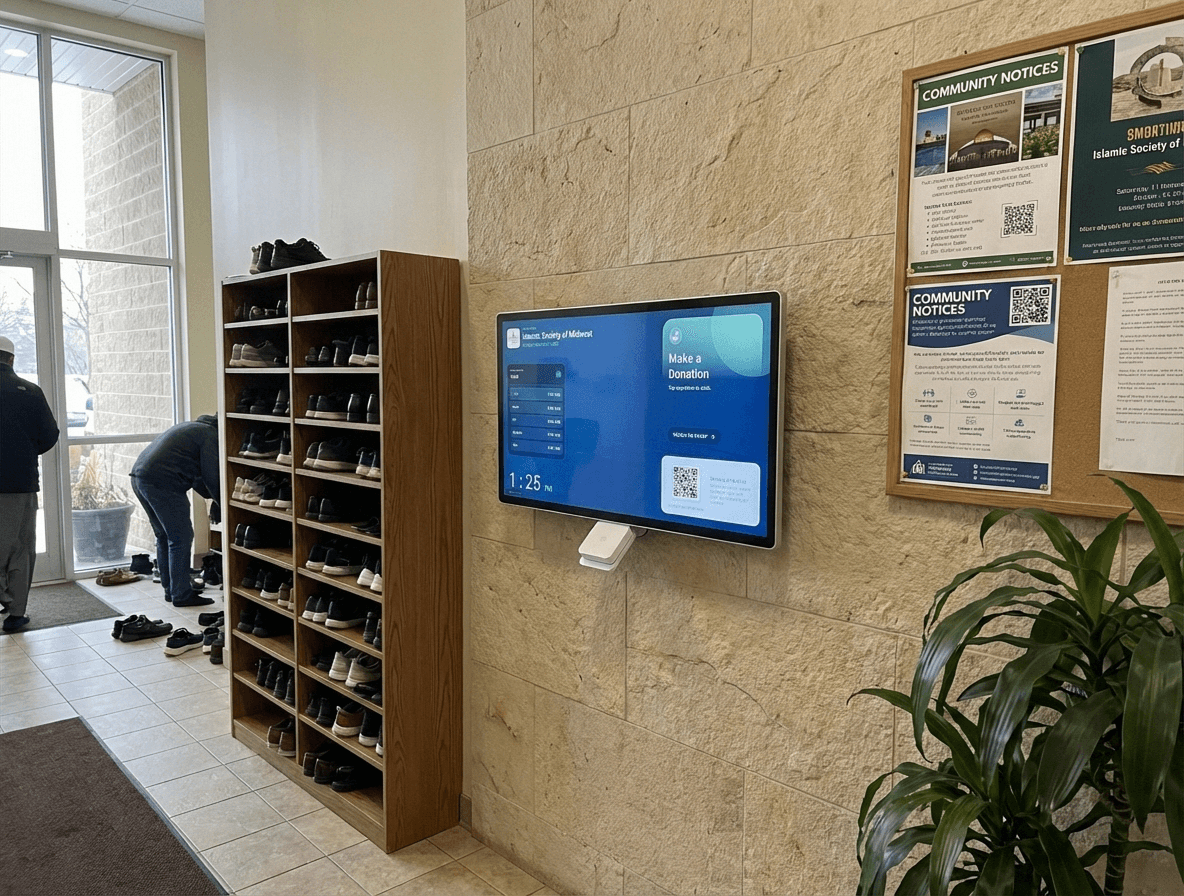
A kiosk keeps the donation visible and immediate while QR codes remain useful as a secondary option.
Why masjids choose a dedicated donation kiosk
Mosque fundraising is not generic ecommerce. The best system understands Jumu'ah traffic, Ramadan urgency, Zakat clarity, and the trust expectations of Muslim communities.
Mosque donation kiosk vs QR code donations
The right choice depends on the donor moment. Here is how the options compare for North American mosques.
QR codes are useful but passive
QR codes work best as reminders on posters, newsletters, and seats. They are less effective when donors are moving quickly after prayer.
A kiosk creates a giving station
The physical presence of a kiosk makes the giving opportunity harder to miss and easier to complete immediately.
Trust signals
Built to earn donor confidence
Donors need to understand the fund, trust the organization, and complete the gift without confusion. Khayr keeps those priorities at the center.
Frequently asked questions
Should a mosque use QR codes or a kiosk?
Use both when possible. QR codes are good for distributed reminders, while kiosks are stronger for high-intent in-person moments.
Ready to evaluate a mosque donation kiosk?
Tell us about your masjid, Jumu'ah traffic, Ramadan goals, and current collection process. We will help you map the right setup.
Request a demo